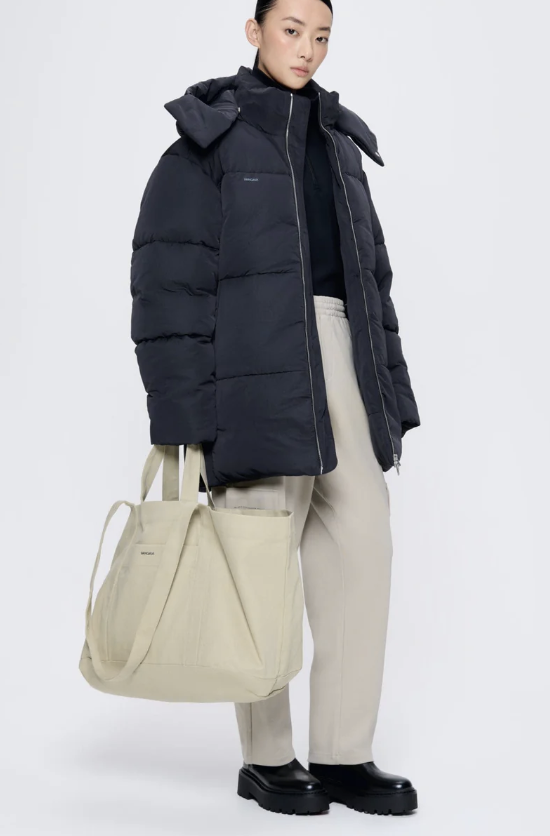
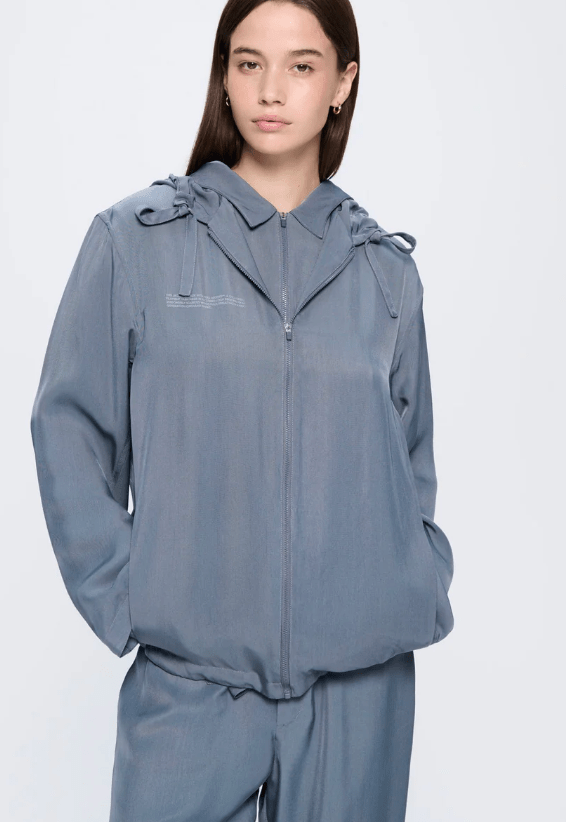
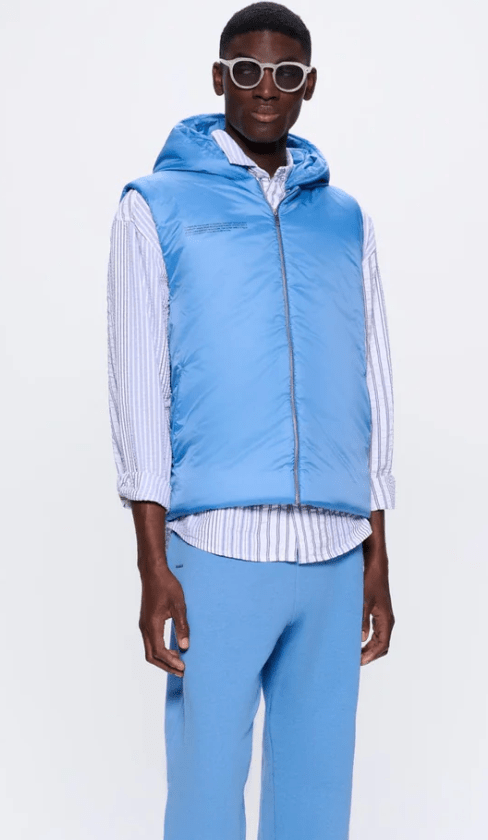
PANGAIA entered the market in 2019 with a premise that reads more like a research mandate than a fashion launch. The brand is not centered on seasonal storytelling or trend cycles. It is built around material science that can scale. Bio based fibers, recycled inputs, regenerative agriculture, and responsibly sourced feedstocks are the core business model. Clothing functions as the proof of concept.
That model reframes fashion as a systems question. If the industry’s biggest externalities come from extraction, chemistry, and overproduction, then real value creation lies in redesigning inputs. PANGAIA’s staple silhouettes like hoodies, tees, and lightweight outerwear behave like controlled experiments. They show what next generation fabrics can do when they move from the lab to the market.
The mission is explicit: create products that support human well being while minimizing environmental harm. In practice, that means treating environmental impact as a design constraint and social responsibility as infrastructure rather than philanthropy. It is an operational choice, not a moral performance.
What makes PANGAIA compelling from an economic standpoint is its refusal to lecture. The company does not sell virtue. It sells participation in a transition. Sustainability becomes iterative: a research pipeline, a network of labs, and a community of consumers who understand that progress is cumulative. In that context, humility becomes a competitive strategy. No single material will fix fashion, but incremental improvements can shift cost curves and accelerate adoption.
There is still an economic tension here. PANGAIA sits at a premium price band because scientific research, early stage materials, and smaller production runs are expensive. Yet the fashion economy will not decarbonize at scale if sustainability remains a privilege. The challenge becomes access. How do you make low impact textiles cost competitive without collapsing margins or sacrificing innovation. Long term affordability depends on volume, technology transfer, and policy. Costs fall when new fibers shift from novelty to commodity, when demand accelerates, and when early adoption is de risked for manufacturers.
So what is PANGAIA really offering. It is not lifestyle aspiration or logo driven status. It is infrastructure for a regenerative economy expressed through a sweatshirt. The value sits in the inputs, the science, and the wager that fashion’s future competitiveness will depend on materials research as much as aesthetic differentiation.
Connection, curiosity, collective problem solving. That is the thesis.
 The Fashion Economist