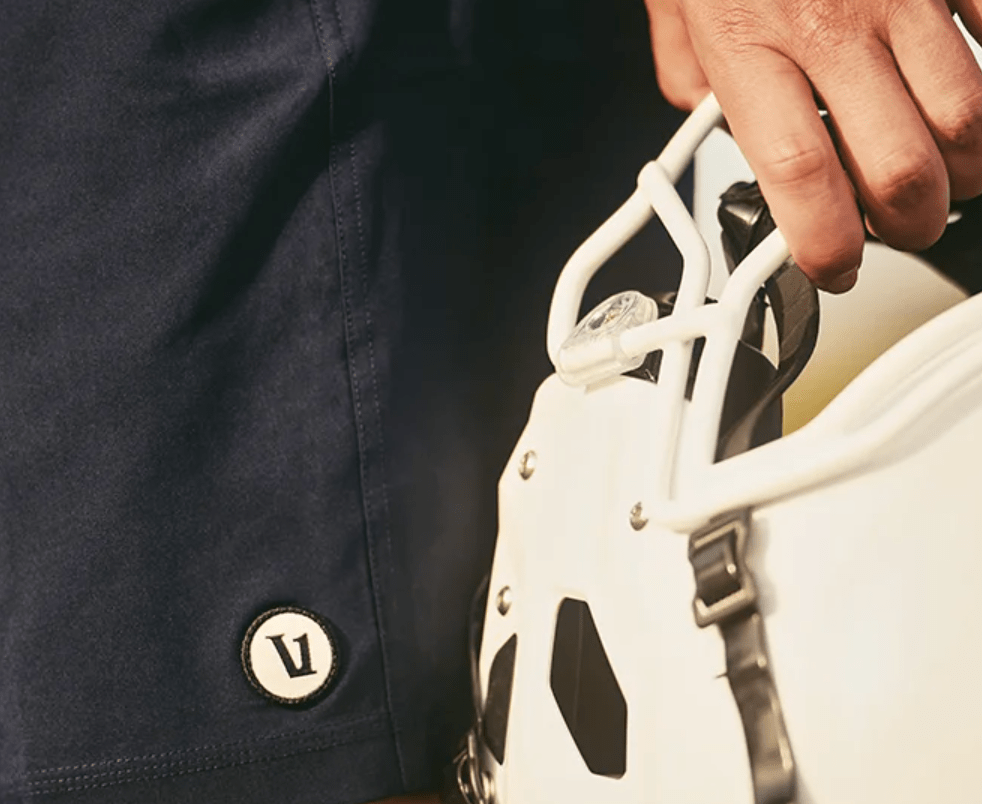
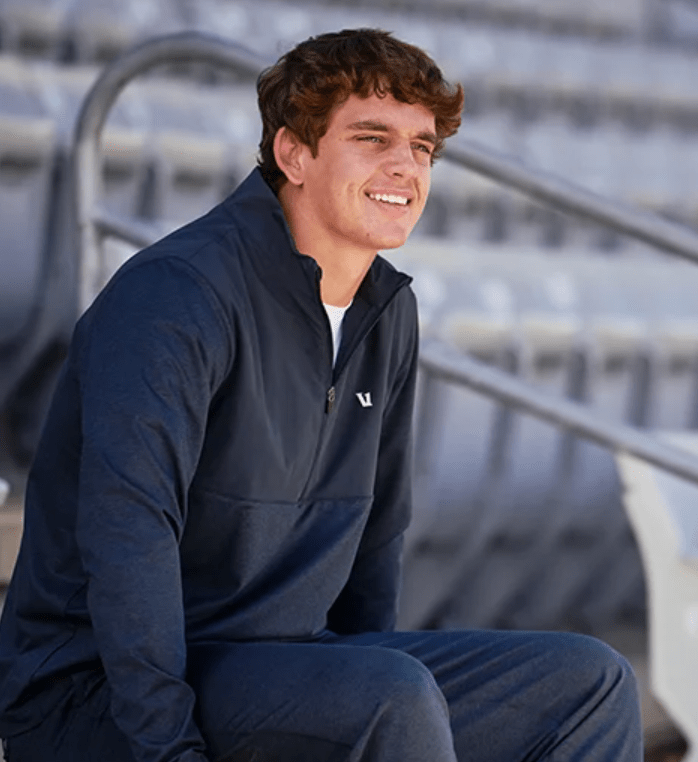
Signing a high-profile athlete is never just about putting a face on billboards. It’s a strategic move that can capture new demographics, reshape brand perception, influence product pipelines, and open fresh markets. A single endorsement deal ripples through financial planning, merchandising, supply chain logistics, and long-term brand identity, making athletes not only marketing ambassadors but catalysts for business transformation.
When Vuori announced its deal with Arch Manning, the rising football star with one of the most recognizable surnames in American sports, most headlines framed it as a classic brand-meets-athlete partnership. But beneath the surface lies something more significant: how a growing fashion brand recalibrates when it aligns with an athlete who carries both generational potential and cultural weight.
This isn’t Vuori tying its future to Manning alone, the company already has major names in its roster, including gymnast Livvy Dunne, tennis players Jack Draper and Tristan Boyer, and cyclist Justin Williams. What’s different here is the intersection of demographics and legacy. Manning isn’t just a quarterback; he’s a Manning, part of a dynasty that resonates deeply with football fans across the South and beyond. That’s what makes this partnership more than a headline, it’s the opening move in a broader strategy that will shape how Vuori grows, produces, and competes.
Capital and Consumers: A Bet on Demographics
Endorsement deals aren’t just about visibility; they’re capital allocation choices. For a fast-growing company built on men’s premium basics, Vuori’s decision to sign Manning signals both ambition and confidence.
Internally, this means budget shifts and ROI modeling. Manning opens doors not only to college students and football fans, but also to Southern markets Vuori hasn’t fully tapped. The cost of a multi-year deal becomes less about paying for name recognition and more about underwriting Vuori’s entry into an entirely new consumer lane.
Product Pipeline: From Studio to Stadium
Athlete partnerships inevitably influence what lands on the racks. Vuori’s yoga-meets-surf aesthetic may now extend further into performance-driven product lines such as compression wear, training shorts, and warm-up gear that resonate with football and gym-focused consumers.
Consumers should expect capsule collections tied to Manning and bolder palettes that channel team-like energy, signaling a shift toward designs that speak directly to performance culture. In effect, the contract doubles as a design brief—dictating not just what products get made, but who they’re made for.
Operations: Managing the Surge
Every merchandising pivot ripples through logistics. Anticipating spikes in demand, Vuori’s operations team will likely increase preseason orders, compress lead times, and strategically allocate inventory to football-heavy markets like Texas and Louisiana.
For a brand accustomed to steady growth, these surges present both opportunity and risk. Overstocking ties up capital, while understocking wastes a rare burst of visibility. Manning forces Vuori to treat supply chain agility not as back-office work, but as a central business strategy.
Brand Positioning: From Wellness to Performance
Perhaps the biggest recalibration is positioning. Vuori’s roots are coastal, casual, and wellness-driven. Manning doesn’t erase that identity, but he layers on a new dimension: performance credibility. Vuori has already proven its ability to break into high-performance markets with athletes like Livvy Dunne, but Manning represents a different kind of play, anchored in demographics, legacy, and regional loyalty.
Suddenly, Vuori isn’t just competing with brands like Lululemon in the leisurewear space, it’s stepping onto turf dominated by Nike, Adidas, and Under Armour. That shift requires new campaign visuals, fresh messaging, and a recalibrated brand voice, without losing the California DNA that built its base.
Vuori’s athlete strategy also balances timing. Dunne, for example, may never compete as an Olympian, but she’s already a cultural force, delivering massive NIL influence and Gen Z reach today. Manning, by contrast, is just beginning. His value lies in what he represents long-term: untapped demographics, a dynasty surname, and the potential trajectory from college star to NFL face. Together, they show how Vuori is layering athletes not just by sport, but by timeline, securing cultural relevance now while placing bets on future icons.
The Bigger Picture: Athletes as Economic Assets
The Vuori–Manning deal underscores a broader truth: athletes are no longer just endorsers, they’re economic assets. They shape financial planning, influence product pipelines, and sway investor confidence as much as they move consumers.
Nike and Adidas have long built empires on these dynamics. Now, newer challengers like Vuori and Alo are playing the same game, layering athlete partnerships onto brand building as part of their growth strategies.
What makes the economics of these deals so fascinating is how much more is at play than visibility or hype. Every signature on a contract sets off a cascade of business decisions across budgets, design, logistics, and brand identity. Arch Manning exemplifies this dynamic because he represents more than athletic promise: his family legacy amplifies cultural relevance, his youth unlocks emerging demographics, and his sport connects to regions Vuori has yet to fully penetrate. For Vuori, Manning isn’t simply exposure, he’s a lever, one that shows how a single athlete can redirect the trajectory of an entire brand.t to fully penetrate. In Manning, Vuori isn’t simply buying exposure, it’s buying a strategic lever, one that illustrates exactly how an athlete can reshape a brand’s future far beyond the playing field.
Additional Questions:
Could Vuori be benefiting from “athlete fatigue” with legacy players like Nike, Adidas, and Under Armour, whose rosters are already saturated with big names?
Inside Vuori HQ, how do decision-makers calculate whether Southern markets will actually convert, balancing demographic models, retail heat maps, and cultural fit against the cost of the Manning bet?
What happens if Manning underperforms or never becomes a true NFL star, how does Vuori hedge against the unpredictability of athletic careers?
Could the NIL-driven athlete economy itself reach a saturation point, where consumers stop associating endorsements with authenticity and start tuning them out?
Is Vuori building a long-term athlete ecosystem (like Nike’s Jordan Brand) or simply stacking endorsements without a unifying brand architecture?
 The Fashion Economist