Reflections from the Vogue Business Webinar
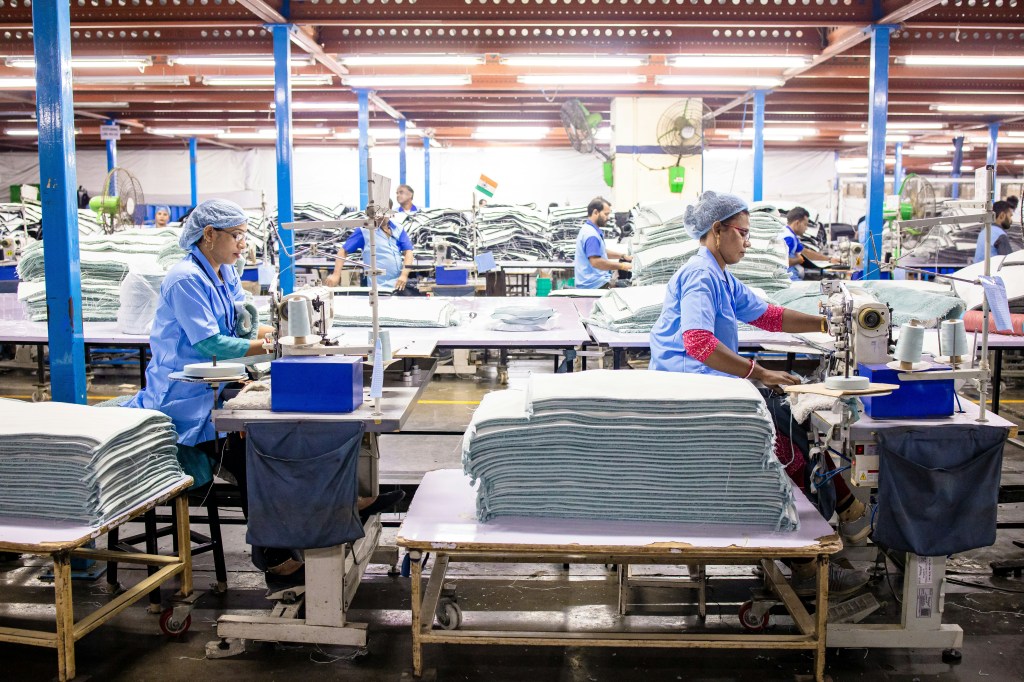
Fashion supply chains have long spanned continents, built on deeply ingrained systems that prioritize low labor costs and keep prices relatively low across much of the industry. Industries are beginning to rethink the value of proximity. The recent Vogue Business webinar hosted by Kristie McGregor and Bella Webb, Can Fashion Make Nearshoring Work in a Globalized World?, offered a deep dive into why brands are exploring nearshoring and onshoring models—and what challenges still stand in the way.
Why Nearshoring, Why Now?
The resurgence of interest in local or regional production is more than a passing trend—it’s a strategic response to global instability. The pandemic exposed deep vulnerabilities in fashion’s supply chains, while trade wars and shifting tariffs—particularly under the Trump administration—amplified the risks of relying on distant manufacturing hubs. When Trump announced a 125% tariff on goods from China and eliminated the de minimis threshold, brands were forced to reconsider their sourcing strategies. No matter how cheap the labor or efficient the production, the potential cost of tariffs brought many operations to a standstill.
Although brands had already begun rethinking the complexity and distance of their supply chains, recent tariff hikes and trade tensions accelerated that momentum. Sustainability goals—like cutting emissions by reducing the gap between producer and consumer—paired with the need for greater speed, flexibility, and visibility, have made a compelling case for more localized production. Long, opaque supply chains are no longer just environmentally costly—they’re operational liabilities.
At the same time, regulatory and consumer pressure is reshaping expectations. The EU’s upcoming digital product passport is pushing traceability to the forefront, and countries like the UK, Italy, and France are leaning into place-based craft and provenance as part of their brand narratives. Nearshoring is emerging as a strategic move: U.S. brands are looking to Latin America, while European companies increasingly turn to Turkey and Morocco to regionalize their sourcing.
The Roadblocks
Despite its appeal, nearshoring is far from a plug-and-play solution. Rebuilding localized production systems means confronting a host of structural challenges that make “producing closer to home” easier said than done.
Labor and energy costs in Europe and North America are significantly higher than in traditional offshore manufacturing hubs. For brands used to razor-thin margins and fast fashion price points, these higher overheads can seem incompatible with profitability—at least without rethinking pricing, product mix, or consumer expectations.
Material sourcing is another bottleneck. Even if brands want to produce garments regionally, the raw materials often aren’t there. Many countries in the Global North no longer manufacture textiles at scale or specialize in the types of fabrics needed for trend-driven or technical garments. This lack of product-specific expertise means that brands still have to rely on international supply chains for core inputs—undermining the goal of localization.
A fading industrial base also presents a major hurdle. In places where textile production once thrived—like parts of the U.S., UK, or Northern Italy—factories have closed, skills have been lost, and investment has stalled. Decades of offshoring have hollowed out entire supply ecosystems, leaving behind limited infrastructure to support high-volume or high-skill production.
There’s also a deeper, often unspoken tension at play. As several panelists pointed out, the legacy of colonialism continues to shape global supply chains—particularly when it comes to raw material sourcing. Cotton, wool, and other key fibers are often grown or processed in the Global South, and the idea of fully “onshoring” production in the Global North runs up against both geographic realities and long-standing global inequalities. Creating a self-contained, domestic supply chain may be logistically and ethically unrealistic without addressing these broader structural imbalances.
In short, while nearshoring offers a promising path forward, it also demands a serious reckoning—with cost structures, industrial reinvestment, and the complex historical forces that still underpin fashion’s global footprint.
What Brands Are Doing Differently
Some brands are already experimenting with what nearshoring can look like in practice, blending regional production with global sourcing to strike a new kind of balance.
Mulberry has a compelling example of a hybrid strategy. The heritage leather brand now produces 50% of its staple styles in the UK, maintaining tighter quality control and proximity to its lifetime repair service. More trend-driven, fast-moving pieces are made in Turkey and Vietnam, where agility and cost-effectiveness still outweigh domestic options.
John Smedley, once a supplier to top luxury houses, is now reinvesting in third-party manufacturing after a 40-year hiatus. Backed by a £4.5M investment in new machinery and staff, the brand is rebuilding its production capabilities. Its wool sourcing model is hyper-local: fibers travel less than 300 miles from field to factory in the UK. Yet like many others, Smedley faces a critical challenge—people. The average factory floor worker is aging, and too few younger workers are entering the field.
Still, it’s important to recognize that nearshoring is far more realistic for upscale, heritage, or designer brands—those with the margin flexibility to absorb higher costs and pass them along to consumers. For most of the global population, affordable clothing still depends on offshore manufacturing and the economies of scale it provides. This is one of the fashion industry’s hardest tensions: how to build ethical, resilient supply systems without abandoning affordability. The risk is a growing divide, where sustainable and traceable fashion becomes a luxury, while the majority of consumers are left with no alternative but cheap, fast fashion
The Need for a Skills Revival
But even for brands willing to nearshore, a critical piece of the puzzle is often missing: people. Without a skilled, motivated workforce, domestic production isn’t just expensive—it’s unsustainable.
The manufacturing talent gap is a recurring theme in discussions around onshoring. Young people often see factory jobs as low-status or exploitative—a perception deepened by past scandals and lack of visibility into modern roles. A rebrand is needed, one that emphasizes technical skill, creativity, and sustainability.
Policymakers and educators must step in to evolve training programs and show Gen Z that a future in fashion doesn’t only mean design—it can also mean innovation in production, materials, and systems.
Thinking Beyond Cost
Building a skilled workforce is essential—but so is shifting how we define value. The appeal of nearshoring goes beyond immediate cost savings and lies in long-term operational gains.
A central theme of the webinar was the importance of redefining how we measure value in fashion production. Nearshoring isn’t always cheaper in the short term—especially when compared to the low labor costs and high-volume efficiencies of offshore manufacturing. But many brands are beginning to realize that upfront cost isn’t the only—or even the most important—metric.
When supply chains are shorter and production is closer to home, lead times are faster, allowing brands to respond more quickly to shifting trends and consumer demand. This agility can significantly reduce the risk of overproduction, which often leads to deep markdowns or excess inventory.
Nearshoring can also lead to better quality control, as design and production teams are more closely connected and able to iterate together in real time. The result? Fewer production errors, more refined final products, and ultimately, less waste.
Another major advantage is transparency and ethical oversight. Working with regional partners makes it easier to monitor labor conditions, enforce standards, and build long-term relationships based on shared values. In a time when consumers are increasingly asking who made my clothes, being able to offer real answers is becoming a brand differentiator.
There’s also a logistical upside: simpler coordination with partners and factories, less reliance on unpredictable shipping routes, and reduced risk of supply chain disruption due to geopolitical events, port congestion, or global crises.
And the data supports this shift. Many garments produced offshore never sell at full price—underscoring the hidden inefficiencies baked into long, rigid production cycles. A more local, responsive model allows brands to test products in smaller batches, adapt quickly, and reduce both waste and markdowns. In the long run, this can mean stronger margins, healthier inventory management, and a more resilient business overall.
Toward Circularity and Regenerative Systems
Nearshoring doesn’t just reshape production—it could also help enable more circular and accountable systems, especially in regions grappling with mounting textile waste.
In the Global North, textile waste is piling up—landfills are full of discarded garments, and recycling infrastructure has lagged far behind production. Nearshoring could present a unique opportunity to repurpose that waste locally, rather than continually extracting and importing new raw materials. By shortening supply chains and locating production closer to end-of-life recovery points, brands could create closed-loop systems that reduce dependency on virgin fibers and lower overall environmental impact.
This kind of model could become a powerful differentiator—not just for sustainability-minded consumers, but for regulators and investors demanding action on waste. But we’re not there yet. Circular infrastructure is still fragmented, and legal red tape—such as inconsistent recycling policies and trade classifications—makes scaling difficult. The webinar posed a compelling question: could nearshoring help support globally accountable extended producer responsibility (EPR) models? It’s a complex policy conversation, but one the industry can’t afford to ignore if it hopes to future-proof itself.
A Just Transition
Finally, any shift toward nearshoring must account for its global impact. As brands move production closer to home, workers in the Global South—who’ve long powered fashion’s growth—risk losing their livelihoods. A truly just transition will require longer-term planning, investment in skills transfer, and efforts to redeploy or upskill displaced workers. Without this, nearshoring risks replicating old inequalities in new forms.
My Take: Nearshoring Isn’t a Silver Bullet—But It Could Be a Catalyst
Nearshoring has the potential to make fashion more resilient, transparent, and sustainable—but only if it’s done strategically. It’s not enough to move production closer to home without reshaping the systems that surround it. Labor, materials, education, and infrastructure all need to evolve in tandem.
What we need is a glocal mindset—one that shares ideas and innovation globally while fostering regional production models that make sense locally. But “local” doesn’t always mean simple. Many countries, like the U.S., lack access to key raw materials, and importing them from across the globe may cancel out the very emissions and cost savings nearshoring aims to achieve. Without advanced manufacturing technology or scalable circular systems, the vision falls short.
And then there’s labor. The workforce simply isn’t there right now. So the question becomes: will we invest in reskilling and rebuilding the talent pipeline—or will nearshoring end up relying primarily on automation and advanced manufacturing? Do we want it to rely entirely on tech? And if so, what new challenges could that introduce—around equity, employment, and access?
Technology may create a new kind of talent pool, but it could also narrow job opportunities if we don’t ensure roles remain available and accessible across skill levels. As the industry modernizes, we need to ask not just how we’ll produce differently, but who will be part of that future.
I don’t have all the answers. But I believe nearshoring could be a powerful part of fashion’s future—if we ask the right questions, align the right systems, and design for more than just proximity. The goal shouldn’t just be to produce closer to home. It should be to produce smarter, fairer, and more adaptively in a changing world.
 The Fashion Economist